
THE ZION
CHRISTIAN CHURCH (ZCC)
(Some more
updated version will soon be placed)
The Zionist Churches proliferated
throughout southern Africa, and became African Independent Churches; research
in 1996 suggested that 40% of all black South Africans belonged to a Zionist
church.

An open letter to the ZCC worshipper
How does God reveals Himself
or speak today? (pdf)
|
CONTENTS |
Succession
disputes
Characteristics of Zionist churches
The continuing growth of the church Prophecy and traditional divination
|
|
|
|
|


Origins
Zionist beliefs grew out of
late-nineteenth and early-twentieth religious missions to southern Africa. In
particular the churches owe their origins to the Christian Catholic Apostolic
Church of John Alexander Dowie, based in Zion, Illinois in the United States.
A Zionist church was founded in
Johannesburg, South Africa in 1895; however, the church quickly integrated into
indigenous southern African life, and had an entirely African leadership within
twenty years of its founding.
Succession disputes
Schisms and succession disputes
during the twentieth century led to the foundation of thousands of different
congregations, of which the largest is the Zion Christian Church, with around 3
million followers, led by Barnabas Lekganyane.

Characteristics
of Zionist churches
Zionist churches are
characterized by the following features:
- Syncretic
mixing of Christian and traditional African religious beliefs
- Use
of faith-healing and revelation through dreams
- Riverine
baptism
- Ritual
garments, often mostly white, and prophetic staffs.
- Food
taboos, such as not eating pork.
- Some
denominations accept polygamy.
The church is unrelated to the
Jewish political movement of Zionism.
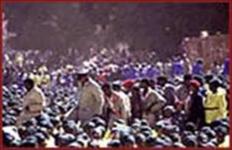
The continuing growth of the church
The 1991 census figures (CSS
1992:122) showed that 9,7% of the black population of South Africa who gave
their religious affiliation were members of the ZCC, compared to 10,3% in our
survey, some fifteen thousand church members in Soshanguve alone. If the
official census figures for the ZCC in 1980 are accurate, then this church has
experienced phenomenal growth over the past eleven years (300%). They were the
biggest single church in Soshanguve in 1991.
We asked members of the church
why they were attracted to the ZCC. The answer was often based on appreciation
for the 'Africaness' of the church. The fact that their church is founded and
led by Africans is for some people very important. ZCC members would refer to
the African liturgy of the church, especially the ways of singing and dancing.
Several of the ZCC respondents said that they preferred this church most of all
because it was an 'African' church. The church is specifically geared to
fulfill African aspirations and meet African needs. One ZCC member gave typical
expression to this sentiment when he said the following:
“The reason I like being in this
church is because it is African. Everything we do in this church - the songs we
sing, the way we jump and do things - you don't feel like a foreigner, you feel
like an African.”
Sometimes there is evidence of
continuity with African traditional ideas, which becomes attractive for some
African people searching to find their cultural roots in a rather faceless
urban society. Some members of the ZCC said that they were in the church
because it was the one revealed to them by an ancestor. The pattern of this
type of response was that the respondent or a family member was sick; the
ancestor appeared in a dream, and said that if they would go to the church,
they would be healed. They followed this instruction, and have remained in the
ZCC ever since, often believing that the continuation of their healing is
conditional upon their continuing to be members of the church.
For some respondents the rules
of the church were important reasons for being there: correct attire such as
the wearing of uniforms, the taboos in the church such as the ban on pork,
tobacco and alcohol, and the paying of tithes and other church dues. Several
ZCC members said that 'the things that were not supposed to be done' by church
members were the most important teachings in the church, and that they were
based on the Bible. Some members said that for them one of the most important
things the ZCC did was to encourage young people to go to school and to provide
bursaries for them. Other practical things offered in the ZCC such as an
insurance scheme were also mentioned in this context. For some members, the ZCC
was attractive because it was the 'biggest church in South Africa'; and a
member of the church had dignity and respect with other people. One member said
that there was ample opportunity for ZCC members to find work and to be
promoted, because they were trusted by Whites. Another ZCC member said that he
was in the church because it was a church in which people were at peace with each
other, and where love, respect and honesty prevailed. These sentiments express
the dignity and sense of self-worth that indigenous churches give to Africans
in South Africa who have long been the victims of exploitation and personal
affronts to their humanity.
The main reason people joined
the ZCC in its early years was for healing from sickness. Because of the
significant number of second generation Christians now in this church, the
ongoing healing offered to these members in fact makes healing one of the most
important factors in its continued expansion. Almost half (44%) of ZCC members
in our survey were second or third generation members of the church, and
another 10% had married into the church. Healing still accounted for 15% of the
ZCC members joining the church.
People join the ZCC because felt
needs are met - and this often means healing from physical sickness and
discomfort. People in black townships in South Africa are still largely
underprivileged, which means inter alia that efficient medical
facilities are for most people scarce and expensive.
Other factors also contributed
to the growth of the ZCC. Some of our respondents stressed that the church was
able to help them in some way to overcome serious emotional and domestic
problems. One informant told of her family being on the verge of divorce. She
heard the 'voice of God' telling her to go to see a certain 'man of God' who
would pray for the restoration of her family. She did so, and her marriage was
saved. As in the case of healing, the solution to these problems rests largely
on the ability of the prophet or church leader to affect a remedy through
prayer and faith in the power of God. In our in-depth interviews the issue of
healing came across as the most frequently mentioned reason that people were in
the Pentecostal-type churches, a higher proportion than was indicated in the
statistics. Some respondents were emphatic that healing was the main reason
they were in the church. Healing is certainly one of the main activities (if
not the main activity) of Pentecostal-type churches. A ZCC man told us
that he had been sick for a long time and had tried diviners, medical doctors,
and other prophets - all to no avail. Then his father appeared to him in a
vision and said that he should go to the ZCC. 'I went there', he recalled,
'they healed me, and that is why I still go there. There is no other church
like the ZCC. The others failed to heal me.' Lukhaimane (1980:63) said that
healing was the reason for 80% of Engenas Lekganyane's followers joining the
church. It was 'a faith healing and a miracle performing church (ke kereke
ya Mehlolo)' (1980:46). A ZCC minister we encountered in our survey told us
why he had joined the church:
“A friend of mine told how he
had been helped by the ZCC when he was sick. Seeing that I was suffering from
tuberculosis at the time, I decided to go there. They do not use muti
[traditional medicine], and they do not depend on inyangas [traditional
healers] and sangomas [diviners]. They just pray for you, give you some
tea, and make you vomit using pure water which the prophet has prayed for. This
is one of the reasons that I joined them. Six months after I started attending
the church I was completely healed. I had been attending the clinic; they had
given me tablets for TB. I was taken from one doctor to another and from one
hospital to another. The problem was that they could not detect what the
problem really was; they were only guessing that I had TB. Then I went to this
[ZCC] church which operates under the Spirit of God. They told me that I did
not really have TB; but I had the ancestral spirits - that was why I was
coughing, choking and gasping for air. They made me to drink some of their tea,
and made me vomit. They prophesied over me and gave me the instructions from
the ancestors. After obeying all that the ancestors told me, I was told that I
was to become a minister in the church. The leaders laid their hands on me, and
I stopped coughing. I have not coughed again to this day. I was completely
delivered. The whole secret lies in obeying what the
ancestors require of you.
White people tell us we are suffering from TB because they don't know anything
about the ancestors.”
A member of the ZCC in
Soshanguve related how she came to join the church, during which process
several factors were simultaneously at work. She had suffered from severe
headaches for a long time. Then one night she had a dream in which she saw her
grandfather coming to her dressed in the khaki uniform, cap and boots of the
ZCC. He said that if she wanted help for these problems she should go to Moria
(the ZCC headquarters) where she would find a prophet who would pray for her so
that she would be healed. She obeyed, and the prophet came up to her and said
'I saw you in a dream; you are suffering from headaches'. He prayed for her,
and she was healed from that day onwards. The prophet told her that if she
wanted to stay healed she had to stay in the ZCC for the rest of her life. She
considered, however, that the main reason that she was
in the ZCC was because it was the church shown to her by the ancestors.
At the same time the prophet was exploiting to the full his healing power as an
effective method of recruiting a new member for the church.
In
the ZCC the prophets are people of immense importance. They are the messengers who hear from God and proclaim his
will to people. They are sort of seers, people who have divine power to 'see'
the revelations of God pertaining to the complaint of the enquirer, especially
sicknesses. Like diviners, they are usually expected to 'see' the complaints
before they are uttered by the sufferers. One of the most common answers given
by ZCC members to the question 'What is a prophet?' was that the prophet is a
person who sees what sickness is troubling you, what the reason is for it, and
how it may be healed. One woman had the following expectations of a prophet:
“A prophet reveals someone's
problems when you go to him. He will be able to tell me deep secrets about my
condition when I am sick. I should therefore not tell him what I am suffering
from; he must be able to tell me exactly what I am undergoing and give me the
remedy to heal the sickness troubling me.”
They are healers par
excellence, the ones to whom the faithful must go when they or their loved
ones are sick or afflicted in any other way. Many respondents obviously saw
this as the primary function of a prophet: 'The prophet is somebody who helps
people when they are sick', was one response typical of many. Their healing
practices are expected to be effective and to actually bring healing to the
patients. They are the ones who must pray for and dispense the holy water and
other symbolic healing objects as the need arises. They are also people who are
expected to give direction and counsel for all kinds of problems. And prophets
in a few instances are people who are believed to declare the will of the
ancestors.
The prophet is expected to be
available to fulfill his prophetic function at any time. Furthermore, in the ZCC the Holy Spirit will descend in an extraordinary
way during church services, so that the prophets are anointed to operate then.
They will then single out people for prophetic therapy. Their problems will be
revealed, and advice given as to what action should or should not be taken. We
observed several instances of this procedure. The prophet will usually manifest
some sign that the Spirit has taken control; the prophets snorted, cried,
whistled, panted, jerked and contorted their bodies in different ways. Some bent
over as they walked, wringing their hands behind their backs. Others were
completely silent and behaved 'normally'. The people being singled out were
pointed to by the prophet; and they had to then follow. Sometimes the prophet
clapped the hands together to get someone's attention, and then pointed with
the hands together in a praying posture. The status or rank of the person being
singled out made little difference; a young unmarried woman can command one of
the church leaders to follow her to the prophetic enclosure for counsel, and he
must follow, as we observed several times.
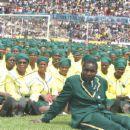
Prophesying is an
essential aspect of the ministry in the ZCC. As Daneel (1988:25) puts it, 'It
is the accepted way in which the Holy Spirit reveals His will for a specific
situation'. In this sense it forms part of pastoral care; for the many
different problematic situations encountered by African people are brought to
the prophets for their assistance. They make known the will of God for a
particular situation; and thus through the Holy Spirit they help bring relief.
In these churches 'it is taken for granted that this form of communication
between God and man belongs to the essence of Christianity' (1988:27). Prophets
often exert a moral restraint on people. One ZCC respondent, for example, told
of how a prophet had revealed that he was stealing from his workplace. He would
have to stop immediately, or he would land up in prison, he said. He immediately
obeyed.
There were a number of
respondents who spoke about these objectionable practices among some prophets
of 'pointing out witches' - these were regarded as false prophets. In fact, we
came across a case which illustrated the possible harmful effects of this
particular prophetic practice. Mrs. M, a member of the ZCC, told of the day
when her daughter was struck on the head by a stone which was thrown by her
son. The child was badly hurt. At the time it happened she saw her neighbors,
who had been sitting outside, 'quickly go inside'. After going first to a
diviner and then to an Apostolic prophet, she was told that she should visit
the ZCC prophets who would help the child. The prophets told her that she must
not blame her son for what had happened. The son had been controlled by a power
which was not from him, they said. He had been bewitched by the neighbors, who
had sent a tokoloshe (an evil spirit) which had made him angry. She was
therefore not to discipline the son, nor shout at him for what had happened.
Mrs. M said that she did not suspect anything at the time; but when the
prophets told her this, she remembered her neighbors’ actions and knew that
they were 'responsible for this work'. One can only surmise that this incident
must have caused considerable hard feeling between this woman and her
neighbors. It is unlikely that this kind of prophecy by itself can have any
therapeutic or counseling value. Had the prophets initiated a process of
reconciliation - such as Daneel (1974:307) had observed in Zimbabwe, in which
both the afflicted and the ones accused of afflicting were counseled within the
church fold - then the prophetic advice may have been the beginning of a truly
African solution. Finding the cause of the suffering is very important in this
context, and this type of prophetic diagnosis may not always be wrong. The
diagnosis may produce a psychological catharsis which may benefit the afflicted
in relation to the real fear of witchcraft.
The majority of members of the
ZCC believed in the essential value of the prophets in meeting human needs
which could not be met elsewhere. To some respondents, the character of the
prophets is of utmost importance. One respondent said that one must be
absolutely sure that the person praying for symbolic healing objects is a pure,
straight person, or it may result in misfortune. Our field worker was told by a
ZCC prophet that he needed to receive ongoing therapy from a 'good' minister,
and not just any minister, to receive healing.
At the ZCC services we attended,
we personally participated in prophetic rituals. Our field assistant, Sam
Otwang and I were both called into the prophetic enclosure for therapy. On the
first occasion a prophet summoned Sam together with six other young men to
follow him to the enclosure. Sam and his companions had to kneel down before
the prophet, who was an elderly man. They were told that they were all
experiencing severe pain in the head and eyes. Four of them, including Sam,
were wearing spectacles. The prophet told them that they needed to get water
from a spring near Brits to use for the healing of their weak eyes, and that
they should get a 'good' minister to help them. He then said that some of them
were suffering from pains in the legs, particularly in the knees. They had to
get sand from a dam to apply to their legs, and should pierce their legs on
both sides of the knees with a needle - an 'injection' treatment that is
sometimes practiced in the ZCC. Finally, he said that they should stop eating
sugar and salted foods. This caused fatigue and diabetes, and a loss of male
virility, he explained. The seven men were then allowed to return to the main
service. Apart from the fact that he was wearing spectacles, Sam was not
suffering from any of the ailments 'identified' by the prophet at the time. The
other notable fact was that the prophet did not attempt to give reasons for the
sicknesses, as so many other prophets do in their healing sessions. He simply
named the sicknesses and their remedies. (The apparent 'mistaken' diagnosis
will be discussed later).
I was called for prophetic
therapy on two occasions. On the first occasion, a man probably in his fifties
dressed in the green uniform approached me, indicating that I was to follow him
to the enclosure. He proceeded there grunting, snorting
and breathing heavily. When we reached there, I was given some paper to
kneel on, and he started to prophesy. God wanted to bless me, he said, as I had
come to the ZCC 'because of some problems'. Ramarumo (the present bishop) had
directed me there. I had heart palpitations, he said, for which the recipe was
to be sprinkled with blessed water and to drink Joko tea. (I did not have heart
palpitations). At that point we were interrupted by a senior minister who
chided the prophet for having called me out of the main church enclosure. We
were visitors, he said, and prophesying to visitors had to be authorized by the
leaders. Evidently the prophesying in the ZCC is subject to control by the
leadership.
On the second occasion Sam
Otwang and I were instructed by a senior minister to accompany him to a senior
prophet who would be able to help us. We went to a place near the entrance
where the prophet, dressed in a business suit, sprinkled us liberally with blessed
water in front and behind, and then gave us each some to drink. Then he lit a
roll of paper and waved the smoke around each of us, finally placing the
burning paper in our cupped hands. These rituals evidently symbolized
purification and protection from evil. During this procedure no words were
spoken; and we assumed that the praying had taken place beforehand. Once the
rituals were over we were instructed to return to our seats.

The spirit world of African
traditional thought constructs in its own cosmology the built-in fears and
threats that demand a Christian response. The African Christian prophet
attempts to give this response, particularly in the healing sessions, when the nature
and the cause of the disease are given at the same time. Diagnostic prophetic
activity is probably the most common type of prophecy in the ZCC. An
interesting illustration was provided by a ZCC member in Soshanguve. She had
been sick; and on visiting a prophet at Moria, she was told that she would keep
her healing provided that she remained in the church for the rest of her life.
Her family was being troubled by sorcery and by the tokoloshe (an
anthropomorphous evil spirit discussed in chapter six). The trouble manifested
itself in various ways and at different times. Both the woman and her husband
believed themselves to have been poisoned by acquaintances, for they were
suffering from stomach ailments described as 'something moving in our stomachs,
something eating us from inside'. At night the children were being visited by a
tokoloshe, and the parents were powerless to do anything about it. They
visited the diviners, who told them that they had been bewitched and provided
them with muti, which did not help them. They then went to the ZCC
prophet, who prayed for them. Her husband and she had to drink water blessed by
the prophet. Both of them vomited; her husband brought up 'something that
looked like a crab' and she brought up 'something like a spider'. The problems
with the tokoloshe and the stomach ailments then disappeared. On another
occasion this respondent's daughter was very ill. The parents went to see the
prophet, who told them that the girl had been bewitched by another girl at
school. The prophet prayed and gave the girl blessed water and a string to tie
around her waist; and she was healed.
It appears that the diagnoses
given by the prophets are not always accurate, at least in the ZCC. In my case,
I was told that I had heart palpitations. It was unclear whether he was
referring to heart disease or to a state of stress; but neither was my
condition at the time. The field worker was told that he had pains in the legs,
which was also not correct. I was uncertain as to how these prophecies were to
be evaluated by church members themselves; although it was clear that they took
them seriously.
Prophecy and traditional divination
Many of our respondents
acknowledged the similarities between the prophet and the traditional diviner.
'A prophet is a messenger, like a sangoma [diviner]' said one. Another
said the following:
“A prophet is like a diviner. He
tells you some secrets and things that are going to happen. His task is like a
church security guard. If there is going to be some attack on the church
members he will tell you beforehand, and will guard against any spirits that
will come in the church.”
Another showed this basic
similarity when she described how she had once visited a diviner. To this
woman, a 'true prophet' was one who could reveal her sickness supernaturally:
“He was supposed to tell me what
kind of sickness I was suffering from; but to my surprise, the diviner asked me
what was troubling me. I then knew that he was not a true prophet. He did not
help me at all.”
For some ZCC members the offices
of prophet and diviner coalesce; and sometimes the
prophet is not only the agent of the Holy Spirit but also of the ancestors.
It was clear that many members saw the functions of prophet and diviner as
interchangeable. A person who was not baptized would
become a diviner; a person through baptism could convert the spirit into the
spirit of a prophet. This view was repeated to us many times by ZCC
members. One told us that a prophet has the powers of
God or of the ancestors (she saw these powers as the same). A person
with these powers could use them to function as a diviner at home, and could
use the same powers to prophesy in the church. In both
cases the person was a channel of God or of the ancestors, telling people what
God or the ancestors wanted them to do. The
implication was that the ancestors in fact spoke the word of God to people; and
there was no perceived contradiction between the two. Another
member said that a prophet was a 'spirit' in a person which was inherited from
his or her ancestors or parents. Not everybody had this spirit; it must be
inherited from the parents in order to be available for use. One ZCC member
said that a prophet was a person with a gift received 'from his own ancestors'
enabling him to see things and prophesy 'by the spirit'. Similarly, it is
believed in many cases that people may go to a prophet for healing, and fail to receive it because of disobedience of the ancestors'
instructions. The prophet then gives the word from the ancestors,
telling the patients what they need to do in order to be healed. A childless
couple, for example, may have failed to do certain traditional things at their
wedding, thus incurring the wrath of the ancestors. The prophet will instruct
them to perform the necessary traditional rituals, without which they will
continue to be childless. One ZCC member told us that he was in his living room
one day when he heard a voice telling him to look up at the ceiling. As he did
so, he saw a vision of his father weeping, long since deceased. He then went to
the prophets to find out what he should do. They
advised him to make a ritual killing for his father who was not satisfied with
his conduct, because he felt he was being neglected. The prophets in
this instance did what any diviner would have done - they played an identical
role, at least in the perception of this member. Many
ZCC members do reject the ancestor cult; and some refer to ancestors as demon
spirits. I have not yet come across evidence of prophetic
confrontation in relation to the ancestors; but this does not mean that such
confrontation never takes place in the ZCC. The fact that the majority of ZCC
members were found to reject the observance of the ancestor cult probably means
that the cult has been confronted by at least some leaders and prophets.
There is no doubt that healing
from illness has a major role in the life of ZCC members. It forms a prominent
part of ZCC liturgy every week; and one cannot visit the ZCC without observing
this emphasis and the rituals associated with it. One of the main features of
everyday ZCC life is the belief in what Lukhaimane (1980:62) calls 'faith healing', which he defines as the use of 'sanctified
papers, khutane (blue cloths on clothes), copper wires, strings which people
had to use as protective’s or healing instruments. In faith
healing people therefore had faith in these "tools" and not in God
directly'. 'Divine healing', which he defines as healing through the laying on
of hands, is 'the ordinary healing method which is common in all the Zionist or
Pentecostal churches' (:63-64). This has a Scriptural precedent (Mark
16:17-18); but it was discontinued on the instructions of Bishop Engenas Lekganyane
in 1930 'because it was found to be dangerous on the part of the Church' (:65).
Lukhaimane suggests that Lekganyane did not want his ministers to have power to
heal by themselves without relying on himself as the source of this power. This
proscription seems to have been relaxed in the ZCC in recent years. The laying
on of hands, with (sometimes) the anointing with oil is the usual method
practiced in Pentecostal churches today; and Lukhaimane calls this 'divine
healing'. I find this distinction between 'faith healing' and 'divine healing’
on the part of Lukhaimane, himself a member of the St Engenas ZCC,
unconvincing. It is unlikely that the use or non-use of symbols affects the
quality of the healing being procured, certainly not in the minds of the people
involved in the healing practices. ZCC members are usually unanimous in their
affirmation that it is God who ultimately heals, and that without faith in God
the symbol is useless. In any case, the 'laying on of hands' or the anointing
with oil - regarded by most Pentecostals as legitimate and Scriptural healing
practices - are most probably themselves as much symbols as is the use of
water, a staff or burning paper.
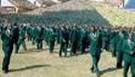
The methods of healing, however,
constitute a major departure by the ZCC and other Pentecostal-type indigenous
churches from the practices of Pentecostal churches; and in fact, this could be
seen as the major difference between them. Most members of Pentecostal
mission and independent churches say that symbolic objects are unnecessary,
because the power to heal is from God alone. A member of an independent
Pentecostal church said that he used to suffer from high blood pressure. His
father was a member of an Apostolic church, and the church healers used ropes
and blessed water to try to help him. 'But these things did not help me at
all', he said. Only after I was saved and I had given my life to Jesus Christ was
the problem of high blood pressure gone.'
The subject of healing produced
a variety of many absorbing responses in the interviews. Most of the members of
Pentecostal and Pentecostal-type churches could tell of a time when they or
members of their family were healed. It was rather interesting to see how often
people would consult medical practitioners, and for what. In the case of
indigenous church members a distinction was often made between sickness that
was regarded as needing a Western medical specialist and that which required a
more 'African' solution, such as a visit to either a prophet or a diviner.
Sometimes the prophet was visited rather than the diviner simply because he was
seen as being more powerful, and not because there was any inherent difference.
Some of our respondents said that a medical doctor was needed when bones were
broken and there was clearly something physically wrong. It was then not right
to go to the prophet or the diviner, who seemed to be more effective for
unseen, internal maladies.
Nevertheless, for members in
most indigenous churches the use of these symbols is one of the central and
most important features of their church life. The most common symbol used in
these churches is that of water, which is 'blessed' or prayed for by a bishop
or a prophet for use by the congregants, either as a healing potion itself or
else in large quantities to induce vomiting, and sometimes mixed with ash. It
is only the prayer which makes the water efficacious. As in traditional healing
methods, a patient must expel the 'death' that is in the stomach to be healed.
The vomiting is believed to get rid of not only physical sickness but of
spiritual defilement also. The water is seen to represent cleansing and
purification from evil, sin, sickness and ritual pollution, concepts carried
over from traditional thought. Sometimes the place from where the water is
drawn is also important; as in baptisms, in some churches the water must be
'living (running) water'. This belief in holy water is prominent in almost all
indigenous Pentecostal-type churches, one notable exception being the IPC.
In the ZCC the use of 'holy
water' is one of the central practices in the church. Members receive water
which has been prayed over by a minister or prophet. This water is then taken
home and sprinkled as a ritual of purification or protection, or it is drunk or
washed in for healing purposes. The water may be sprinkled on people, cars (it
is even put into the radiators of cars for protection), houses, school books,
food, and a variety of other objects. The use of this water is given biblical
justification by referring to God's promise to cleanse his people from all
their impurities by the sprinkling of clean water (Ezekiel 36:25), to the
practice in the Torah of sprinkling water on a person polluted by contact with
a corpse (Numbers 19:11-12) and by the Spirit of God 'hovering' over the waters
(Genesis 1:1). It is therefore believed that the Holy Spirit is present with
the water that has been blessed, or with the river of baptism (eg Dzivhani
1992:16).
In the ZCC the most common
healing method, as in many other indigenous churches, is the sprinkling with
'blessed water' (in Sotho, meetse a thapelo, 'water that has been prayed
for'). The use of water appears to be more of a protective and cleansing ritual
rather than a healing one. Blessed water has in fact many uses: it is used to
purify people or objects after they have become contaminated (such as after a
funeral), to welcome visitors, for protection against sorcery and misfortune,
for the obtaining of employment, for abundant harvests, for cooking and
washing, and for the 'gate test' by prophets at church services (see chapter
three). It is not always necessary for the water to be prayed for by a ZCC
prophet or minister. Sometimes ZCC members may obtain the water for themselves
and pray for it, as in the case of the father whose children were ill at night.
He prayed for a cup of water and gave it to the children to drink; and they
recovered. The source and the type of the water are important. Our fieldworker
was told to collect water from a certain spring near Brits, which he should use
for his healing. When I asked whether the spring had any particular ritual
significance I was told that it was simply a place revealed to a prophet by the
Spirit. They had the prerogative to identify any such specific place in their
prophesying, and the important thing was to carry out their instructions
implicitly. The ZCC now also uses special tea and coffee made for healing
purposes, labeled (in Sotho) tea ya bophelo (the tea of life). One ZCC
informant told us how his child was healed from a deformity known as poala
when the child was given this tea together with water from a spring.
In the ZCC the use of symbolic
healing objects is known as mohau ['grace'], and it is justified from
the Bible by referring to Paul's use of articles of clothing to heal people in
Acts 19:12 (cf Dzivhani 1992:18). Walking sticks blessed by the Bishop, ropes
and strings or strips of cloth worn around the body are also believed to have
protective powers. Strips of blue cloth known as the khutane have to be
worn in a secret place in their clothes to protect members against assaults and
lightning. Similarly, ZCC members tie copper wires across their gates or in
their houses to protect against sorcery and lightning. Almost every ZCC member
interviewed stressed the importance of observing the ditaelo
('instructions') given in order to be safe. This ditaelo is a sort of
secret and personal law which the member may not divulge to anyone else. Some
ZCC members also attach significance to the church badge as a source of
protection, given to each member after baptism. The badge is a token of
faithfulness to the church, a symbol of solidarity and unity with ZCC members
everywhere. A person with a badge on will not dare to drink or smoke, taboos to
all ZCC members.
Another method of healing in the
ZCC is that of pricking, where a prophet prescribes that a patient be pricked
on the hands, legs or in the nostrils in order to get rid of what is
traditionally believed to be the source of sickness and pain, impure blood.
Salt is used to clean the stomach and excess bile through vomiting. The use of
a small piece of wood (kotana), of a sheet of paper waved rapidly over
the patient's body, of sand from a certain river or dam, and the use of other
objects named by the prophets are all common faith healing customs in the ZCC.
We witnessed people coming forward to be blessed in the church services, when
the ministers patted them on their heads with pieces of paper. It is important
to note, though, that behind all these practices is the
fundamental conviction that a prerequisite for protection is the prior
confession of sins, without which the 'medicine' is useless.

ZCC members interviewed believe
in the importance of healing by the use of symbolic objects; but some are
careful to point out that the healing does not come because of any intrinsic
power in the objects themselves, but because of a person's faith in God. One
ZCC member said that ZCC people do not only depend upon these symbols, as 'most
of the time we pray'. Another member said that without
prayer the symbolic objects would not work. A young ZCC woman said that
the objects are only signs to identify you with your church, and they have no
intrinsic power to heal. Another ZCC woman said that these symbols were like
school uniforms - they told others to which 'school' you belonged. Another ZCC
member said that people must have faith in God and not in either the minister
or prophet or in the church - for it is God alone who will help them. Another
said that only Jesus can help a person when troubled by sickness; what is
needed is faith and prayer. One ZCC member made the following illuminating
statement:
“I believe that one can be
healed or delivered by the use of symbolic objects - I believe that with all my
heart. Even though I cannot explain how it happens, one thing I know is that we
have been troubled by people at my place many times. After taking perhaps a
rope or some water, we find that no further trouble occurs, and we are
delivered in that way. Sorcerers are afraid of a person who prays; so when you pray for an object like a rope, or you pray for
water and sprinkle it around your house - when the sorcerers come they
just see the glory of God. They find you with the ropes that have been prayed
for. I know these people are afraid of prayer.
How the power is transferred from the rope or the water to the place that is
paining, or how the water scares the sorcerers away from your place - that I
cannot really explain; but it works!”
It was clear that many ZCC
members in Soshanguve felt that the important thing was not the symbol itself, but the prayer that was offered to God and the faith that was
exercised, without which the symbol would be useless. Several ZCC
respondents placed the emphasis on prayer rather than on the healing symbol.
One woman said that one could be set free from all
kinds of trouble through prayer and waiting on God for the answer, which did
not always come immediately. God would solve all human problems in his
time, she said.
The ZCC has special times when
the sick are attended to; and it seems that this does not usually take place on
Sundays, which is set aside for public worship. In Soshanguve, Wednesdays and
Saturdays are used to minister to the sick.
In the views of the members
themselves, the symbols pointed to the power of God. We did not find many
people who thought that the symbolic objects used in healing had any intrinsic
power in themselves, which is a perceptible departure from traditional beliefs.
It was only prayer, a person's faith in God, and the
power of God which gave efficacy to the symbols, without which they were
useless. Nevertheless, we must not overlook the possible danger of
misinterpretation here. To some people the healing symbols become something
other than symbols of God's power, and are seen as having magical power in
themselves. This is particularly the case (as is true of all varieties of
Christian expression both inside and outside Africa) when with the passing of
time, members observe certain rituals because they have become traditions of
the church, and not because they really understand their symbolic significance.
In these instances the forms remain while the meaning has become obscured. The
result is a syncretism which is neither true to African traditional religion
nor truly Christian. But this problem is by no means peculiar to African
Pentecostalism. All types of church members throughout the world tend to attach
magical interpretations to symbols so that the meaning has changed.
ZCC members must observe the ditaelo
(instructions) given by the church authorities to maintain healing. A ZCC
minister told us that two main things were needed for a person to be set free
from trouble: firstly, the person must be 'in
good standing with God'; and secondly, the instructions passed down from the
ancestors through the mouth of the prophets must be carried out.
This man also told us that the ZCC
helped its members to protect themselves against sorcerers by providing them
with brown paper, which they took with them when visiting non-members. If they
were offered tea or food, they would light the brown paper and wave the smoke
over the food; they were thereby protected from possible poison by sorcery. The
ZCC tea was to be drunk every morning before going to work or school, as this
gave additional protection. The tea leaves were to be put inside the shoes, so
that if perchance a ZCC member should walk where a sorcerer's spells had been
placed on the ground he or she would be protected from harm. ZCC ministers
should carry holy staffs and whips with them at night to defend themselves
against tsotsis (hooligans) and to crack the whip at any tokoloshe
that might be encountered. A crack of the whip apparently rendered him
powerless.
For myself and Sam Otwang, who
were not seeking out help from the prophets nor anticipating it when it was
offered, the description of our participation in the ZCC prophetic healing
ceremonies above leaves one important question unanswered. In both our cases
the prophetic diagnoses were 'wrong'. Did this mean that this was the norm in
these churches, and that the prophets were part of a play acting that is a
gigantic hoax? This conclusion, although 'obvious' and 'logical' from a Western
perspective, would be superficial and altogether wrong. Most of the ZCC and
other church respondents spoke of tangible help that they had received at the
hands of the prophets, and their belief in the absolute correctness of the
prophetic diagnoses. This may be explained by the fact that these people had
needs for which they were seeking solutions; and they had faith in the power of
God working through the prophets. We did not come across a person complaining
about the 'wrongness' of the diagnosis; although a few complained that no
diagnosis had been given, or that the prophetic therapy had been unable to help
them. When I asked ZCC members about our seemingly 'wrong' diagnoses, they
explained that the revelations to the prophets were not always concerning present
conditions. Sometimes the prophets would diagnose afflictions that would occur
in the future. A person who followed their instructions would avoid these
problems. In other words, the prophetic diagnoses are usually taken seriously
by those participating in them; and we must do the same to avoid a Western
misinterpretation. Besides this, human error is inevitable in healing
practices. I have witnessed many Pentecostal healing services over the past
twenty years where sick people have apparently gone away unhealed, and
so-called 'miracles' are claimed which eventually prove to be no miracles at
all. This human failure does not mean that God's power and ability to heal is
thereby negated.
The salvation we proclaim must
deal with the deliverance of the whole person from the totality of the evil
forces which are ranged against one's very existence. The methods used to
receive this salvation and the perceptions concerning the means of grace sometimes
differ. Bishops, prophets, pastors, evangelists and ordinary church members
exercise the authority that they believe has been given them by God to announce
the good news that Jesus Christ saves from sin, from sickness, and from every
conceivable form of evil and 'darkness'. This is the gospel which the church
must proclaim in Africa.
As one accustomed to African
Pentecostalism in its more 'Western' form, I found myself unacclimatised to
what seemed to be the strange yet fascinating liturgy of the ZCC. None of us
can escape the fact of the universal conscious or unconscious use of symbolism
in all Christian expressions, be it African indigenous church, Pentecostal,
Protestant, Orthodox or Catholic. There is a danger that evaluations of
another's symbolism will be based on our subjective experience of what we
perceive as an absence of symbolism in our own religious expression, when even
the absence of overt symbolism is a symbol in itself! In all types of African
Pentecostalism there are certain common characteristics: an absence of
formality, a freedom, and a sense of communal participation were the most
obvious ones, but there were more subtle ones as well. Anyone oriented to a
European or North American expression of Christianity (be it Pentecostal or
otherwise) will be unnerved, and possibly even disturbed by the liturgy of
these churches. Their very Africaness will not be comfortable for most
Westerners. And yet African Pentecostal and Pentecostal-type people in South
Africa have declared their independence, their ingenuity, and their power and
dignity as human beings and children of God. They have preserved the best of
their cultural heritage and have transformed its inadequacies in this
manifestation of power from God to conquer the social injustice and oppression
that has plagued them for so long.
REFERENCES CITED
Anderson, Allan
1992. BAZALWANE: African Pentecostals in South Africa. Pretoria: Unisa
Press
CSS 1992. Population
census 1991. 'Summarised results before adjustment for undercount'.
Pretoria: Central Statistical Service
Dzivhani, G
1992. 'ZCC - church of the almighty God', in The ZCC Messenger 22:16-18
Lukhaimane, E K
1980. 'The Zion Christian Church of Ignatius (Engenas) Lekganyane, 1924 to 1948:
an African experiment with Christianity'. MA dissertation, University of the
North, Pietersburg
© Allan
Anderson
What needs to be understand is
that although the ZCC people call themselves Christian, can in no way be seen
as Christian, for the very basis of true Christianity is not found in or among
them. For a comparison to Scripture watch this space!